ORGANIC URBANISM
Teaming up with residents
Organic urbanism is a method of city-making based on the gradual building and greening of areas, with and for their residents.
In this model, our cities, our villages and their gardens are not conceived as fixed objects, designed once and for all: they transform over time through a multitude of projects, adaptations and initiatives led by those who live and work there.
This approach rests on two inseparable components:
✼ the structuring urban and landscape framework, defined by the public authorities;
✼ the continuous transformation of the urban fabric, carried out by residents and local stakeholders, one plot at a time.

The founding principles
✼ The city evolves gradually rather than being entirely planned in advance;
✼ Urban adaptation results from thousands of projects distributed over time and space;
✼ Residents, property owners and local stakeholders take a direct part in making the city;
✼ The public authorities organise the area-wide framework and set the rules of the game (through local planning regulations (PLU) in particular);
✼ Densification and greening take place mainly within existing urban fabrics, through successive transformations.
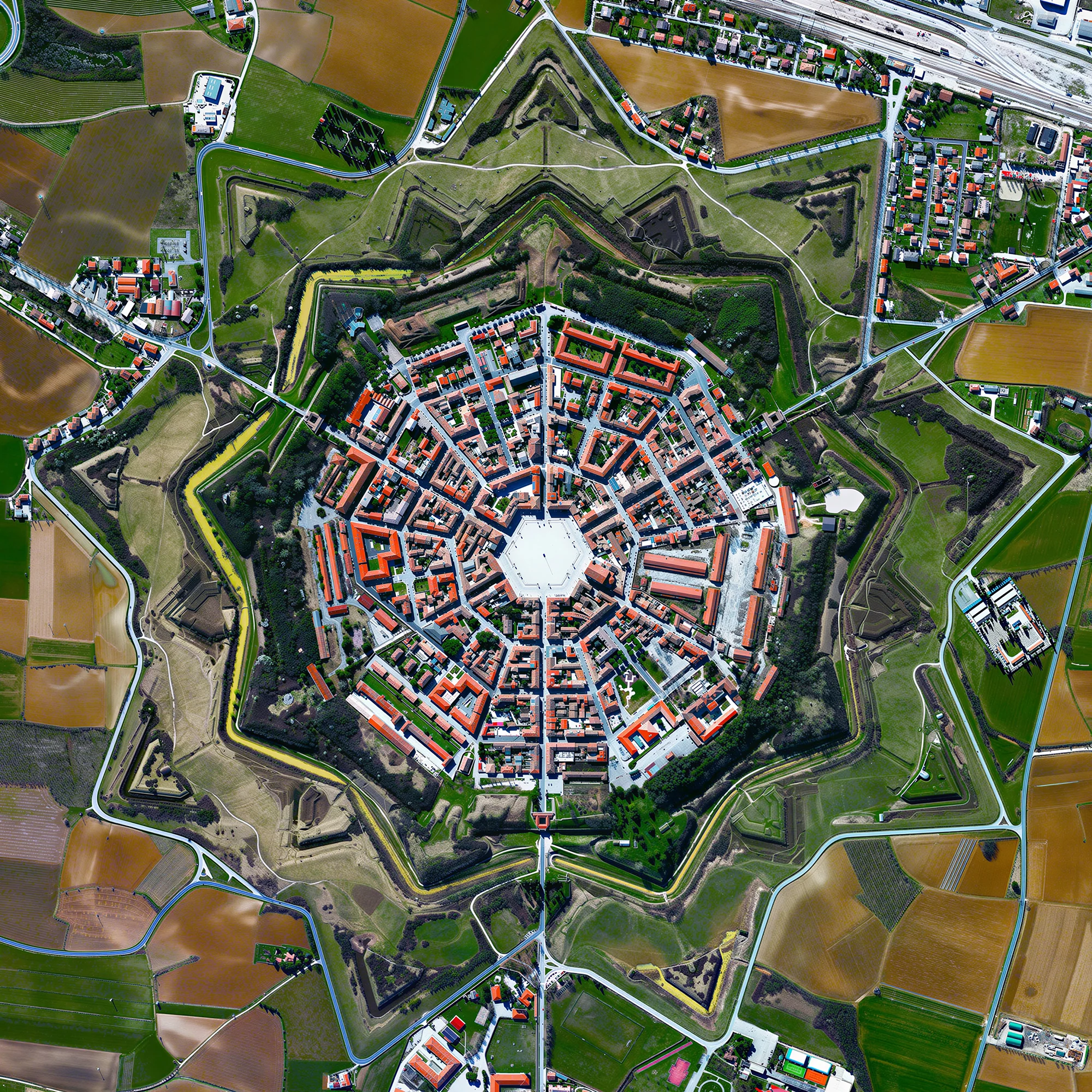
The area-wide framework and the structuring role of the local authority
The public authorities organise the major structures that make collective life possible:
✼ the wider landscape and nature as the primary infrastructure of the area,
✼ sites to be protected, risk areas and heritage to be preserved;
✼ the mobility system and its public transport network;
✼ the spatial distribution and accessibility of jobs, services and shops;
✼ the mesh of the street network and public spaces;
✼ the distribution of parks, gardens and major public facilities;
✼ the provision of access to nature, culture and the amenities of the area.
It is this framework that gives a clear and lasting structure to the development of areas.
The evolution of the urban fabric and the decisive role of residents
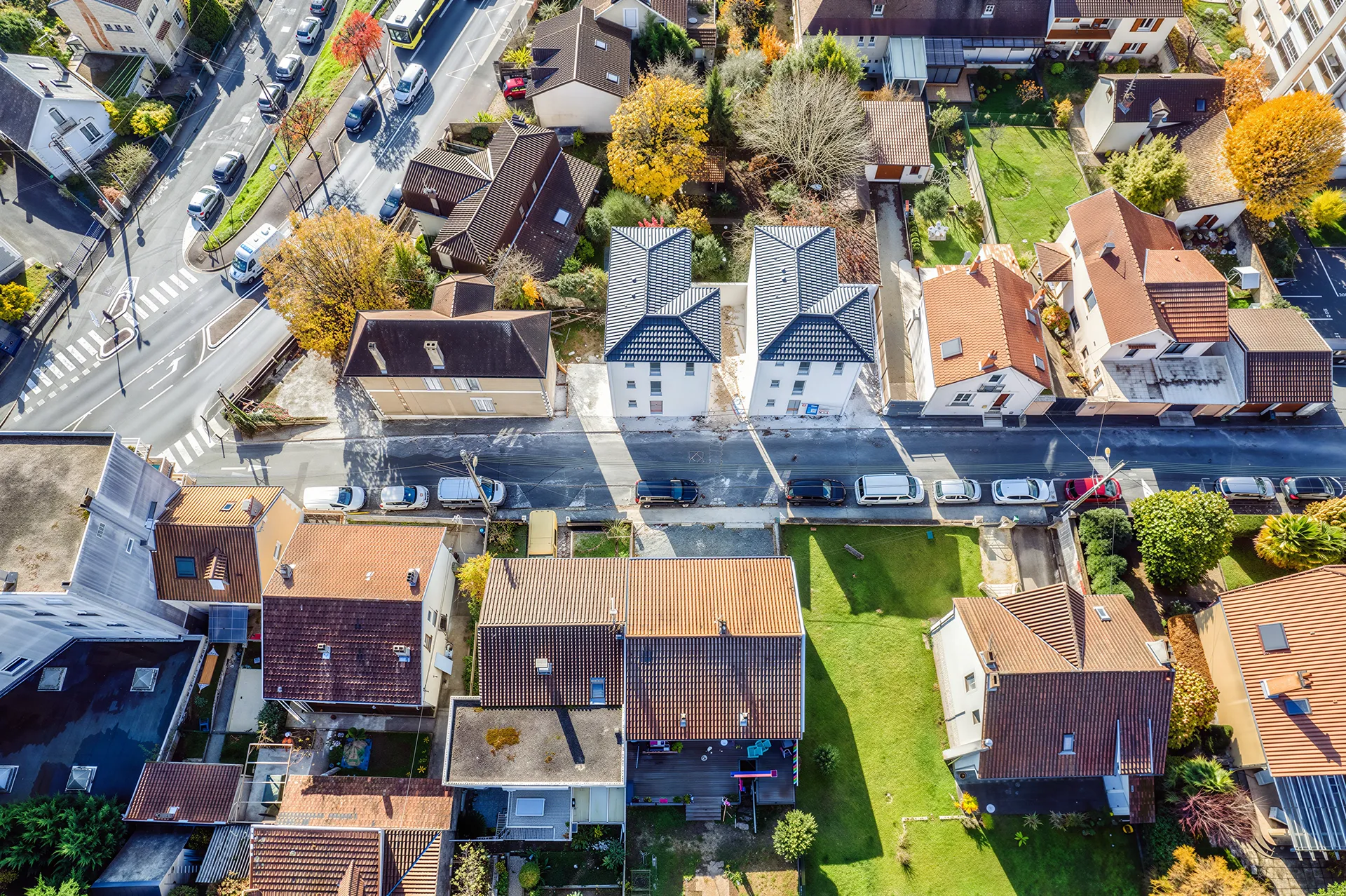
Within this framework, the urban fabric evolves project by project, as needs arise. Private plots, planting, buildings and the housing supply are gradually transformed through the initiative of:
✼ residents and property owners;
✼ designers and construction professionals;
✼ local entrepreneurs and operators.
The city no longer transforms solely through a few large planned projects, but through thousands of distinct initiatives, distributed over time and space.
This incremental approach (which proceeds step by step, observing the concrete results of each transformation) regards cities, villages and their gardens as a collective work in perpetual creation. A living ecosystem, able to evolve and adapt in response to the major economic, demographic and environmental challenges of our time.
A clean break with 20th-century urbanism
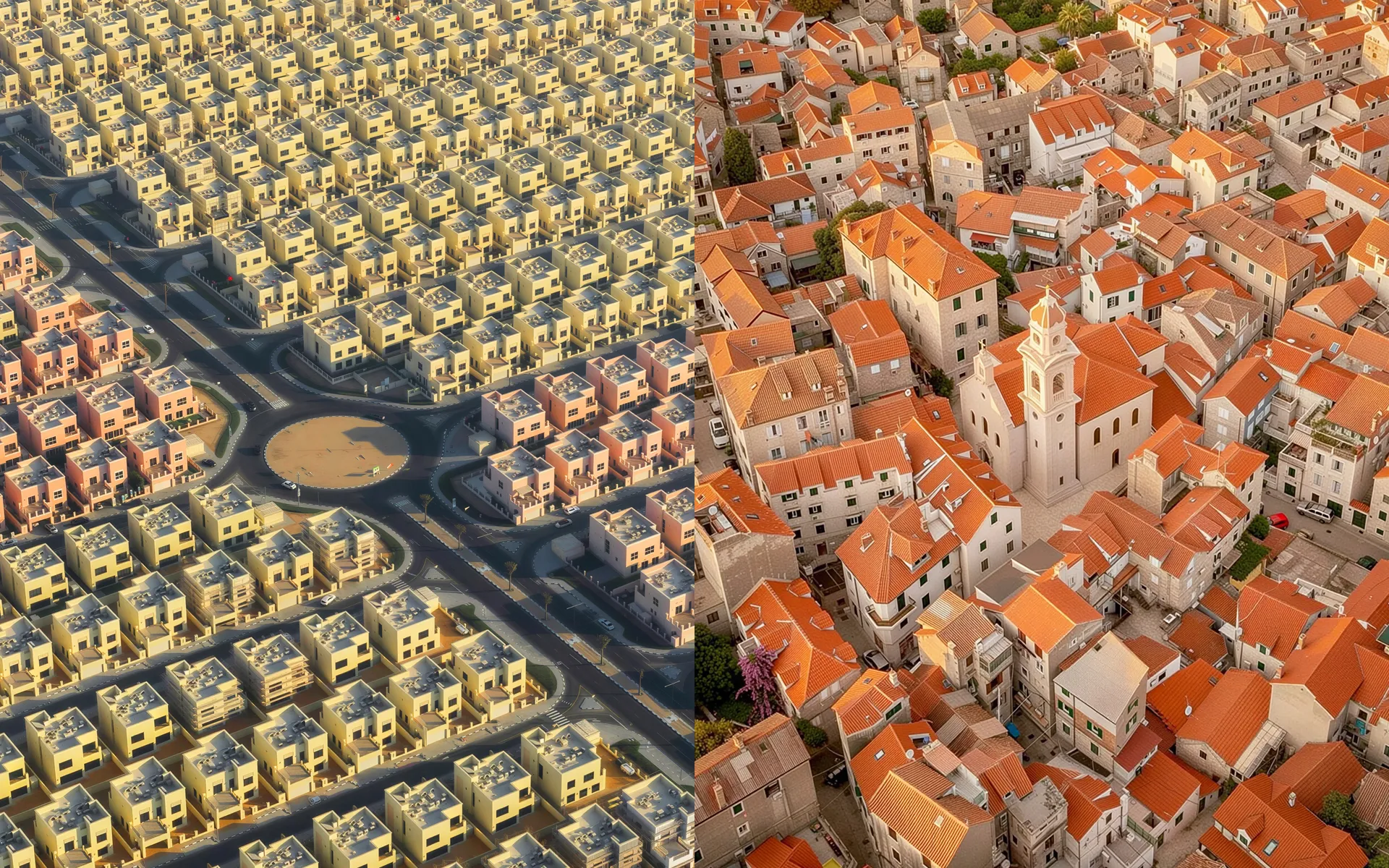
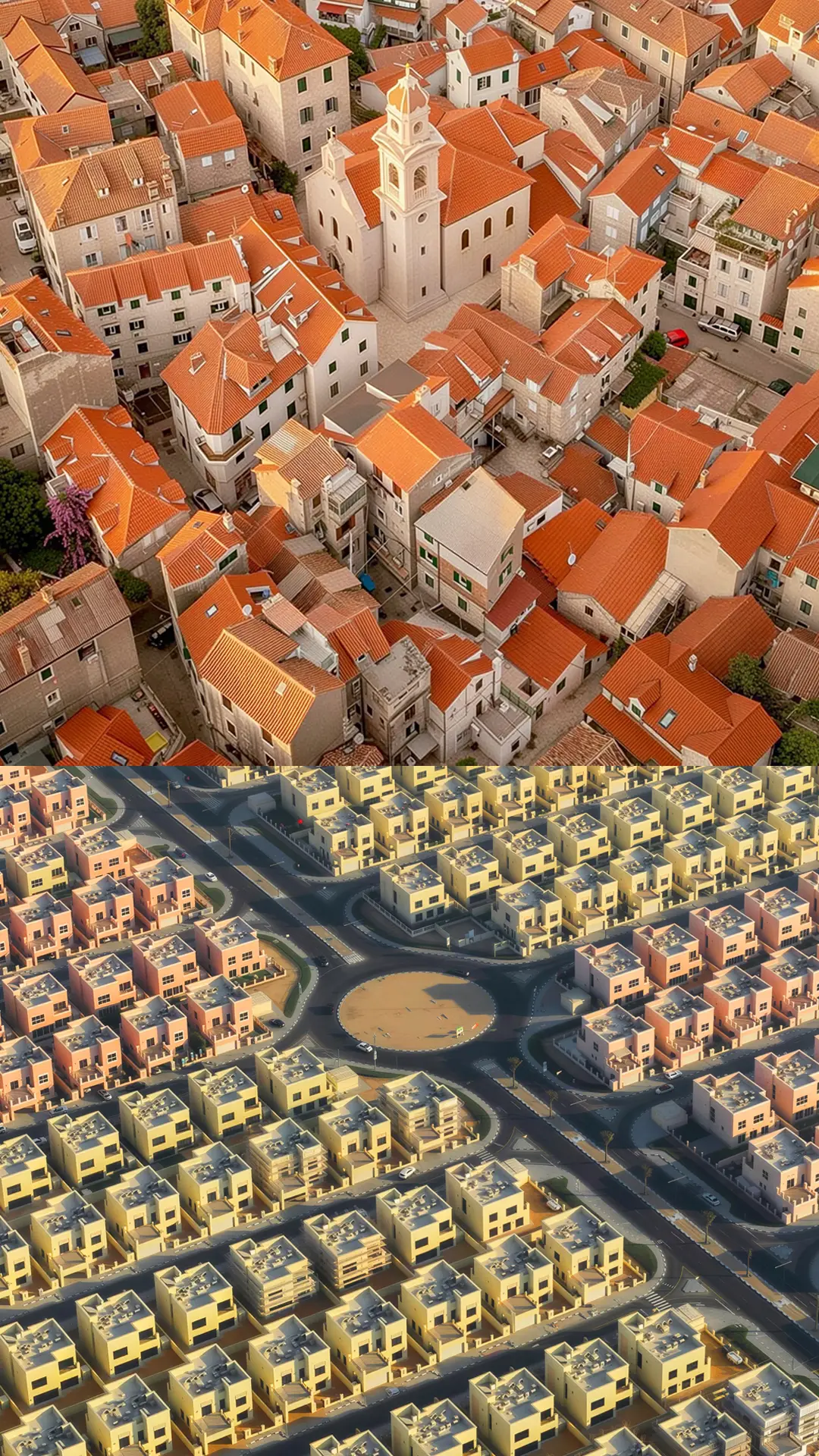
After centuries of organic urbanism, culminating in Europe in the 19th century with the great plans for the controlled extension of historic cities, the 20th century imposed a radically different model: inspired by the standardising logic of industry, and highly centralised.
Public authorities drew up massive master plans, produced by a limited number of actors. In some cases, this model made it possible to build housing and infrastructure quickly. But it also revealed deep limitations: rigidity, architectural uniformity, inability to adapt, exorbitant costs, in construction as in operation.
By default, this functionalist urbanism was complemented by its opposite: the informal, the scattered and suburban sprawl, very largely produced without urban planners or architects.
Organic urbanism offers a third way: creating the conditions for a balanced contribution from large and small projects, from public authorities and private actors, from institutional operators and residents, rather than vainly trying to plan everything in advance.
Micro-projects that make the city
To reconnect with organic urbanism, we must restore the conditions that allow cities and villages to transform through a multitude of local initiatives:
✼ a house that is extended;
✼ a plot that is divided and two gardens that come into being;
✼ a floor added to an existing building;
✼ a vine climbing a blind gable wall;
✼ an extra home built in a garden;
✼ a small block of flats replacing a house;
✼ a sterile lawn giving way to a vegetable garden, a haven for biodiversity, a small cool spot.
Taken individually, these projects are modest. But across an entire city, their accumulation can set off a profound urban transformation.
This is how many cities developed over centuries. And this is how our areas will regain a powerful lever for action to meet the challenges of the 21st century, in particular by beginning the densification and greening of the single-family neighbourhoods and housing developments built in abundance in the inner suburban rings of French conurbations.
Gentle densification to transform the urban fabric from within
Rather than abruptly increasing density through large projects, or continuing urban sprawl, the city can gradually densify within existing urban fabrics. While becoming greener.
This gentle densification makes it possible:
✼ to increase the housing supply incrementally and powerfully;
✼ to limit urban sprawl (no net land take) by making the most of land that is already urbanised;
✼ to strengthen architectural diversity, thanks to the diversity of project owners involved;
✼ to densify and plant existing neighbourhoods, simultaneously;
✼ to multiply the number of potential gardeners in a neighbourhood.
It produces finer, more varied and often more lively urban forms than those resulting from large planned projects. As well as a mosaic of more diverse, better-tended gardens.
Residents as partners in adaptation and transformation
One of the essential characteristics of organic urbanism is the central place given to residents. Property owners, families and local entrepreneurs become direct actors in the transformation of the urban fabric. Each individual project helps the city to evolve.
This capacity for initiative mobilises a wide variety of investment, often impossible to unlock in a fully centralised model. It makes it possible to produce a living environment that reflects its residents, and to make them partners in the great adaptation our cities need in order to meet the challenges of affordable housing, greening, reducing carbon-intensive mobility and economic attractiveness.
The local authority as conductor
Organic urbanism does not mean an absence of planning. The public authorities retain an essential role: they define the objectives as well as the rules of the game that allow the city to evolve coherently: planning rules, preservation and enhancement of natural spaces, infrastructure, public spaces and public facilities, but also the definition of densification strategies differentiated according to urban fabrics, their social and morphological make-up, and the challenges of protecting and strengthening the place of nature in the city.
Rather than designing every neighbourhood and every building down to the smallest detail, the local authority organises the conditions that allow residents’ initiatives to emerge and transformations to take place.
It regards residents and all local stakeholders as partners: to go beyond regulation (authorising gentle densification projects in the PLU), the local authority can set up schemes to support and facilitate projects led by all stakeholders, and in particular by its residents.


Four complementary methods
For some fifteen years, Villes Vivantes has been developing methods for putting organic urbanism into practice across areas. These methods rest on four complementary approaches that enable residents and local authorities to team up:
✼ BIMBY: building new homes on plots that are already built on, sharing land, multiplying gardens and gently densifying existing single-family neighbourhoods to welcome new households in areas that are already serviced, equipped and connected.
✼ BUNTI: reconfiguring and greening the existing building stock, creating additional homes through upward extensions, extensions, conversions, renovations and subdivisions, intensifying the use of under-occupied buildings.
✼ BAMBA: building affordable houses on custom-cut plots, through owner-led development, within land development schemes.
✼ BRAMBLE: strategic intensification operations based on a multitude of small, high-density densification projects.
These approaches have been tested and proven in many local authorities, with thousands of residents leading projects. Today they are helping to renew the way cities can evolve.
The leverage effect of personalised service
Organic urbanism offers a different way of conceiving the city: rather than freezing space in a definitive plan, designed for abstract residents, it organises the city’s capacity to evolve over time, at the initiative of its real residents.
The services developed by Villes Vivantes are personalised. We design tailor-made projects, adapted to each person’s means. Projects are imagined, designed, launched and supported through to completion.
This is how the number of project leaders soars, and how the city becomes an adaptive system, inherently able to integrate the massive social, economic and environmental transformations we need.
The art of holding opposites together
Our cities have always been paradoxical realities. When done well, the methods of organic urbanism make it possible to combine what is often believed to be incompatible:
✼ strongly planned areas that remain deeply free;
✼ powerful public rules that leave room for a multitude of individual initiatives;
✼ infrastructure designed to last for decades, and countless transformations appearing every year;
✼ gentle, compact, large-scale densification, and the multiplication of gardens, planting and hours of gardening.
Organic urbanism does not seek to choose between planning and individual initiative. It gives itself the means to organise their cooperation.
The public authorities structure the area-wide framework: nature, networks, public spaces, facilities, rules. Within this framework, residents, entrepreneurs, designers and local stakeholders gradually transform the urban fabric through a multitude of projects adapted to their specific needs.
The area is built incrementally, recursively and adaptively. It becomes the sophisticated and refined product of an accumulation of singular, contextual responses, rather than of a single model applied everywhere in the same way. In doing so, it can develop a rare quality: that of an environment able to bring together forces once thought incompatible.
Order and freedom. Lasting structures and constant adaptations. A shared framework and a diversity of ways of life.
Going further
Services
✼ With the VVPLACE teams: model the dynamics under way in your area more finely, discover new levers and new options, then carry out pre-operational studies in order to set up innovative operations to adapt and transform what already exists and better meet the real needs of your residents.
✼ With the VVPLUS teams: launch gentle densification operations to house more people, better, at affordable prices, and without sprawling.
Training
✼ MBA Urbanisme Organique: in September 2026, Sciences Po Rennes and Villes Vivantes are launching an Executive MBA to understand how areas are shaped where top-down and bottom-up approaches meet: 120 hours of training, between Paris and Rennes, and two study trips.
✼ VVSCHOOL: the school of organic urbanism. Discover our short remote courses, at lunchtime or in the evening, and put together a tailor-made programme to help your teams change their mindset.
✼ ORGANIC CITIES: discover organic urbanism as it is conceived and practised on every continent. Access the proceedings and recordings of more than 150 talks given at the international conferences held in Paris (2024) and Rennes (2025), and discover the programme for the next edition in 2027.
✼ VVGUIDE: The Villes Vivantes guide, with contributions from 46 urban experts. Explore the range of possibilities and discover new, concrete options to adapt and transform areas, with and for their residents.
✼ Book a meeting with David Miet to consider launching a series of talks in your area or within your organisation, to shift up a gear and move to the next level.
Examples of ongoing operations
✼ Lorient Agglomération’s BIMBY BUNTI operation. ↗
✼ The BAMBA operation in Clermont-Ferrand. ↗
✼ The modelling of the potential and impacts of urban intensification carried out with the OFCE (a French economic research centre at Sciences Po) and Aix-Marseille-Provence Métropole. ↗
Key concepts
Fine grain
✼ Qu’est-ce qu’un tissu urbain à fine granularité? [What is a fine-grained urban fabric?] ↗
✼ Le grain de la ville [The grain of the city]. ↗
✼ Ce sont les petits gestes qui fabriquent les joyaux [It is the small gestures that make the jewels]. ↗
✼ L’architecture du quotidien: matière première de l’urbanisme organique [Everyday architecture: the raw material of organic urbanism]. ↗
Optionality
✼ Fine granularité, optionalité et densification [Fine grain, optionality and densification]. ↗
✼ L’optionalité, cette propriété qui nous permet de faire de l’imprévu un atout [Optionality, the property that lets us turn the unexpected into an asset]. ↗
✼ Optionalité: le Touriste et le Flâneur [Optionality: the Tourist and the Flâneur]. ↗
Incrementality
✼ Pourquoi certaines villes donnent le sentiment d’avoir été “engendrées” plutôt que dessinées? [Why do some cities feel as though they were “begotten” rather than designed?] ↗
✼ La ville n’est jamais produite d’un seul geste [The city is never produced in a single gesture]. ↗
✼ L’urbanisme incrémental, ou la science de l’adaptation des villes [Incremental urbanism, or the science of adapting cities]. ↗
✼ On ne peut pas comprendre ce qui rend une ville vivante sans comprendre ce que veut dire “incrémental” [You cannot understand what makes a city a living city without understanding what “incremental” means]. ↗
Recursivity
✼ On ne peut pas comprendre comment une ville se transforme si l’on ne comprend pas ce que veut dire “récursif” [You cannot understand how a city transforms if you do not understand what “recursive” means]. ↗
✼ Je ne suis pas structuré comme un arbre, mais je croîs comme un arbre. Je suis… une ville [I am not structured like a tree, but I grow like a tree. I am… a city]. ↗
Redundancy, robustness and antifragility
✼ La fine granularité: clé de l’antifragilité? [Fine grain: the key to antifragility?] ↗
✼ Île-de-France: les destins croisés des “mal lotis” et des “grands ensembles” [Île-de-France: the intertwined destinies of the mal-lotis (buyers of plots in substandard interwar housing developments) and the large housing complexes]. ↗
✼ Antifragilité: éloge de la redondance [Antifragility: in praise of redundancy]. Le Guide des Villes Vivantes. ↗
✼ Urbanisme organique et antifragilité: l’“effet Lindy” [Organic urbanism and antifragility: the “Lindy effect”]. ↗
Fractality, self-similarity
✼ Mais à quoi sert qu’une ville soit “fractale”? [But what is the point of a city being “fractal”?] ↗
✼ La géométrie — fractale — des villes dans lesquelles les décisions sont distribuées [The — fractal — geometry of cities in which decisions are distributed]. ↗
✼ Quand la densité respire: la fractalité du réseau viaire [When density breathes: the fractality of the street network]. ↗
✼ L’autosimilarité: quand la nature nous enseigne l’art, gracieux, de la répétition [Self-similarity: when nature teaches us the graceful art of repetition]. ↗
Distributed design and emergence
✼ L’idée d’une maîtrise totale de la ville est dangereuse [The idea of total control over the city is dangerous]. ↗
✼ Éloge du vivant — c’est-à-dire de l’imprévu — en urbanisme [In praise of the living — that is, of the unexpected — in urban planning]. ↗
✼ Les urbanistes seraient-ils les derniers créationnistes? [Could urban planners be the last creationists?] ↗
✼ La science des petits gestes [The science of small gestures]. ↗
✼ Arrêtons de dessiner des quartiers. Codons-les [Let’s stop drawing neighbourhoods. Let’s code them]. ↗
Distributed learning
✼ Les villes comme systèmes d’apprentissage distribué [Cities as distributed learning systems]. ↗
✼ La magie de l’apprentissage distribué: comment l’art de bâtir les villes devient — aussi — une science [The magic of distributed learning: how the art of building cities is becoming — also — a science]. ↗
✼ Quand nos modèles numériques deviennent les premiers obstacles de l’adaptation au changement climatique [When our digital models become the first obstacles to climate change adaptation]. ↗
✼ Comment nous avons cassé la boucle d’apprentissage qui fait vivre nos villes [How we broke the learning loop that keeps our cities alive]. ↗
✼ Quand la morphologie des cours intérieures s’adapte au climat [When the morphology of inner courtyards adapts to the climate]. ↗
Scaling laws
✼ Que se passe-t-il quand on double le nombre d’habitants d’une ville? [What happens when you double the number of residents in a city?] ↗
✼ La densité crée-t-elle des économies d’échelle? [Does density create economies of scale?] ↗
The resident as project owner
✼ Pour un urbanisme à l’écoute du besoin des habitants (BAMBA) [For an urbanism that listens to residents’ needs (BAMBA)]. ↗
✼ La question la plus importante n’est-elle pas celle du passage à l’échelle? [Isn’t the most important question that of scaling up?] ↗
✼ Que se passe t-il lorsqu’on raisonne sur des Français théoriques, habitant des logements théoriques? [What happens when we reason in terms of theoretical French people living in theoretical homes?] ↗
✼ Biodiversité en ville: le jardinier compte plus que la taille du jardin [Biodiversity in the city: the gardener matters more than the size of the garden]. ↗
✼ La stratégie nationale bas carbone est-elle sérieuse? [Is the national low-carbon strategy serious?] ↗
Organic beauty
✼ Quand la beauté d’une ville vient autant du dessin que du grain [When a city’s beauty comes as much from its design as from its grain]. ↗
✼ La beauté ordinaire est un cercle vertueux [Ordinary beauty is a virtuous circle]. ↗
✼ L’expérience enveloppante de la fractalité du bâti [The enveloping experience of the fractality of buildings]. ↗
✼ Emboitements et ornements: la fractalité du bâti, jusqu’à l’infiniment petit [Nesting and ornament: the fractality of buildings, down to the infinitely small]. ↗
✼ La ville comme infrastructure cognitive [The city as cognitive infrastructure]. ↗
Gentle densification
✼ La division parcellaire: art majeur de l’urbanisme organique [Plot division: a major art of organic urbanism]. ↗
✼ Antifragilité: saviez-vous que la densification douce peut être fragile ou antifragile? [Antifragility: did you know that gentle densification can be fragile or antifragile?] ↗
✼ Fractalité du parcellaire, géographie de la confiance et démocratisation de l’accès à la propriété [The fractality of plot patterns, the geography of trust and the democratisation of home ownership]. Le Guide des Villes Vivantes. ↗
Strategic intensification and the village metropolis
✼ L’intensification stratégique [Strategic intensification]. ↗
✼ Pourquoi la dispersion territoriale sabote notre politique climatique [Why spatial dispersal is sabotaging our climate policy]. ↗
✼ En défense des grandes villes denses: l’esprit village [In defence of large dense cities: the village spirit]. ↗
✼ En défense des grandes villes denses: la croissance organique (Jakarta) [In defence of large dense cities: organic growth (Jakarta)]. ↗
✼ Vivre en maison à quelques minutes à pied du métro [Living in a house a few minutes’ walk from the metro]. ↗
Bibliography
✼ Alexander, C. (1965). A City Is Not a Tree. Architectural Forum, 122, 58–62.
✼ Alexander, C., Ishikawa, S. & Silverstein, M. (1977). A Pattern Language: Towns, Buildings, Construction. Oxford University Press.
✼ Almazán, J. & Studiolab (2022). Emergent Tokyo: Designing the Spontaneous City. ORO Editions.
✼ Almazán, J. (2024). Les modèles de micro-urbanisme spontané ou l’émergence de Tokyo [Models of spontaneous micro-urbanism, or the emergence of Tokyo]. Organic Cities Conference, Paris: Sciences Po & Villes Vivantes. ↗
✼ Bertaud, A. (2018). Order without Design: How Markets Shape Cities. MIT Press.
✼ Bettencourt, L. M. A. (2013). The Origins of Scaling in Cities. Science, 340(6139), 1438–1441. ↗
✼ Caraire, D. & Hernandez, A. (2024). BIMBY et BUNTI: faire des habitants les maîtres d’ouvrage de la transformation des tissus urbains et ruraux [BIMBY and BUNTI: making residents the project owners of the transformation of urban and rural fabrics] [conference paper]. Organic Cities Conference, Paris: Sciences Po & Villes Vivantes. ↗
✼ Echanove, M. & Srivastava, R. (2026). The Homegrown City: Reclaiming the Metropolis for its Users. Verso.
✼ Fourcaut, A. (2000). La banlieue en morceaux. La crise des lotissements défectueux en France dans l’entre-deux-guerres [The Suburbs in Pieces: the crisis of defective housing developments in France between the wars]. Créaphis.
✼ Gnacadja, L. (2025). L’auto-promotion encadrée est le seul levier pour capitaliser sur le potentiel de l’informel [Regulated owner-led development is the only lever for capitalising on the potential of the informal sector]. ↗
✼ Hanss, T. & Miet, D. (2024). La densification peut-elle être un levier pour améliorer la biodiversité? [Can densification be a lever for improving biodiversity?] Villes Vivantes / VVCODES. ↗
✼ Hernandez, A. (2025). La densification douce et ses micro-folies [Gentle densification and its micro-follies] [conference paper]. Organic Cities II — French West Coast, Sciences Po Rennes & OFCE. ↗
✼ Jacobs, J. (1961). The Kind of Problem a City Is. In The Death and Life of Great American Cities (ch. 22). Random House.
✼ Lempérière, P., Miet, D., Parodi, M., Pouvreau, L., Stulhfauth, V. & Timbeau, X. (2023). Sur le cycle de vie d’un logement, les émissions de mobilité induites par sa localisation sont très largement supérieures à celles liées aux postes de construction, de maintenance et d’exploitation cumulés [Over the life cycle of a home, the mobility emissions induced by its location far exceed those related to construction, maintenance and operation combined]. VVCODES (Villes Vivantes & OFCE, Sciences Po).↗
✼ Miet, D. (2013). Une épistémologie de la modélisation architecturale. Contribution à l’étude des fondements, à la définition des enjeux et à l’éclaircissement du rôle des modèles en architecture et en urbanisme. Dix expériences de modélisation architecturale [An epistemology of architectural modelling: a contribution to the study of the foundations, the definition of the issues and the clarification of the role of models in architecture and urban planning. Ten experiments in architectural modelling] [Doctoral thesis, ENSA de Marseille, InsARTis laboratory, supervised by S. Hanrot]. HAL. ↗
✼ Miet, D. (2024). L’urbanisme organique comme méthode [Organic urbanism as a method]. Organic Cities Conference, Paris: Sciences Po & Villes Vivantes. ↗
✼ Miet, D. (2024). Entre l’informel et l’hyperformel: l’urbanisme organique [Between the informal and the hyperformal: organic urbanism]. Le Guide des Villes Vivantes. ↗
✼ Miet, D. (2024). Urbanisme organique: faire plus et mieux grâce aux habitants [Organic urbanism: doing more and better thanks to residents]. Le Guide des Villes Vivantes. ↗
✼ Miet, D. Urbanisme organique: les lieux de réconciliation des contraires [Organic urbanism: places where opposites are reconciled]. Le Guide des Villes Vivantes. ↗
✼ Miet, D. (2024). Le ZAN sera beau [No net land take will be beautiful]. Passion Architecture, no. 89 (July–September 2024), feature “Le foncier, matière(s) d’architecture” [Land, the material(s) of architecture]. UNSFA. ↗
✼ Miet, D., et al. (2025). BIMBY, BUNTI: outils pour réussir la transformation des quartiers pavillonnaires en villages [BIMBY, BUNTI: tools for successfully transforming single-family neighbourhoods into villages]. Opérations Immobilières, no. 171-172. ↗
✼ Miet, D. (2024). La densification douce, ou la miniaturisation de l’industrie immobilière à l’heure du ZAN [Gentle densification, or the miniaturisation of the property industry in the era of no net land take]. La Grande Conversation, Terra Nova. ↗
✼ Pouvreau, L. (2023). L’autopromotion accompagnée: un modèle économique pour la production massive de logements abordables en France [Supported owner-led development: an economic model for the mass production of affordable housing in France]. Organic Cities. ↗
✼ Sitte, C. (1996). L’Art de bâtir les villes. L’urbanisme selon ses fondements artistiques [The Art of Building Cities: City Planning According to Its Artistic Principles] (D. Wieczorek, trans.; foreword by F. Choay). Seuil, “Points Essais” series. (Orig. ed. 1889.)
✼ Taleb, N. N. (2018). Skin in the Game: Hidden Asymmetries in Daily Life. Random House. [French ed. Jouer sa peau, Les Belles Lettres, 2017.]
✼ Turner, J. F. C. (1976). Housing by People: Towards Autonomy in Building Environments. Marion Boyars.
FAQ
What is organic urbanism?
Organic urbanism is a way of conceiving the transformation of cities in which the urban fabric evolves gradually through a multitude of projects led by residents, property owners and local stakeholders. The city is no longer produced solely by large planned projects, but by the accumulation of small and medium-sized transformations.
What are the principles of organic urbanism?
Organic urbanism rests on several principles: the gradual evolution of the urban fabric, the diversity of actors who produce the city, the incremental densification of existing neighbourhoods and the structuring role of the public authorities — which define the rules that allow these transformations to happen.
How does it differ from conventional urban planning?
Conventional urban planning often relies on large projects planned in advance. Organic urbanism, by contrast, favours gradual transformation, produced by the accumulation of many small projects that adapt to the local context.
Why do we speak of an “organic city”?
Because the city is seen as a living system capable of transforming over time. Like an organism, it evolves gradually through the interaction of many actors and the constant adaptation of its urban fabric.
How can organic urbanism be put into practice in my local authority?
Implementation rests on three complementary levers: adapting planning rules (PLU) to authorise and encourage gentle densification projects, defining a strategy differentiated according to urban fabrics, and setting up schemes to support residents who lead projects. Villes Vivantes has developed operational methods — BIMBY, BUNTI, BAMBA, BRAMBLE — to help local authorities take these steps in practice.