BIMBY
Multiply gardens
BIMBY: building, planting, gardening—creating the city of tomorrow, plot by plot
BIMBY—an acronym for "Build In My Back Yard"—is an urban planning approach that allows towns and villages to densify and green themselves gradually, plot by plot, through the initiative of their residents.
A method for producing housing through gentle densification that is compatible with the no net land take policy, developed and tested since 2013 by Villes Vivantes with hundreds of pioneering municipalities in France.
The principle: thousands of owners of detached houses have untapped land potential in their gardens. BIMBY consists of activating this potential—by building a new home on the plot or by detaching a portion to sell as a building plot. In doing so, gardens do not disappear: they are shared, planted, and brought to life. A large garden that is difficult for an ageing owner to maintain is reorganised into two or three human-scale gardens, cultivated by new families. More houses, more gardeners, more biodiversity.
When accumulated on the scale of an entire city, these projects become a powerful lever for urban transformation—without sprawl, without demolition, and without major construction projects. But BIMBY is more than just spontaneous plot division: it is a method of organic urbanism, orchestrated by the local authority, which defines the regulatory framework and organises support for every resident with a project.
BIMBY is about a city that densifies, greens, and diversifies all at once. It is a way of building the city with its residents, rather than just for them.
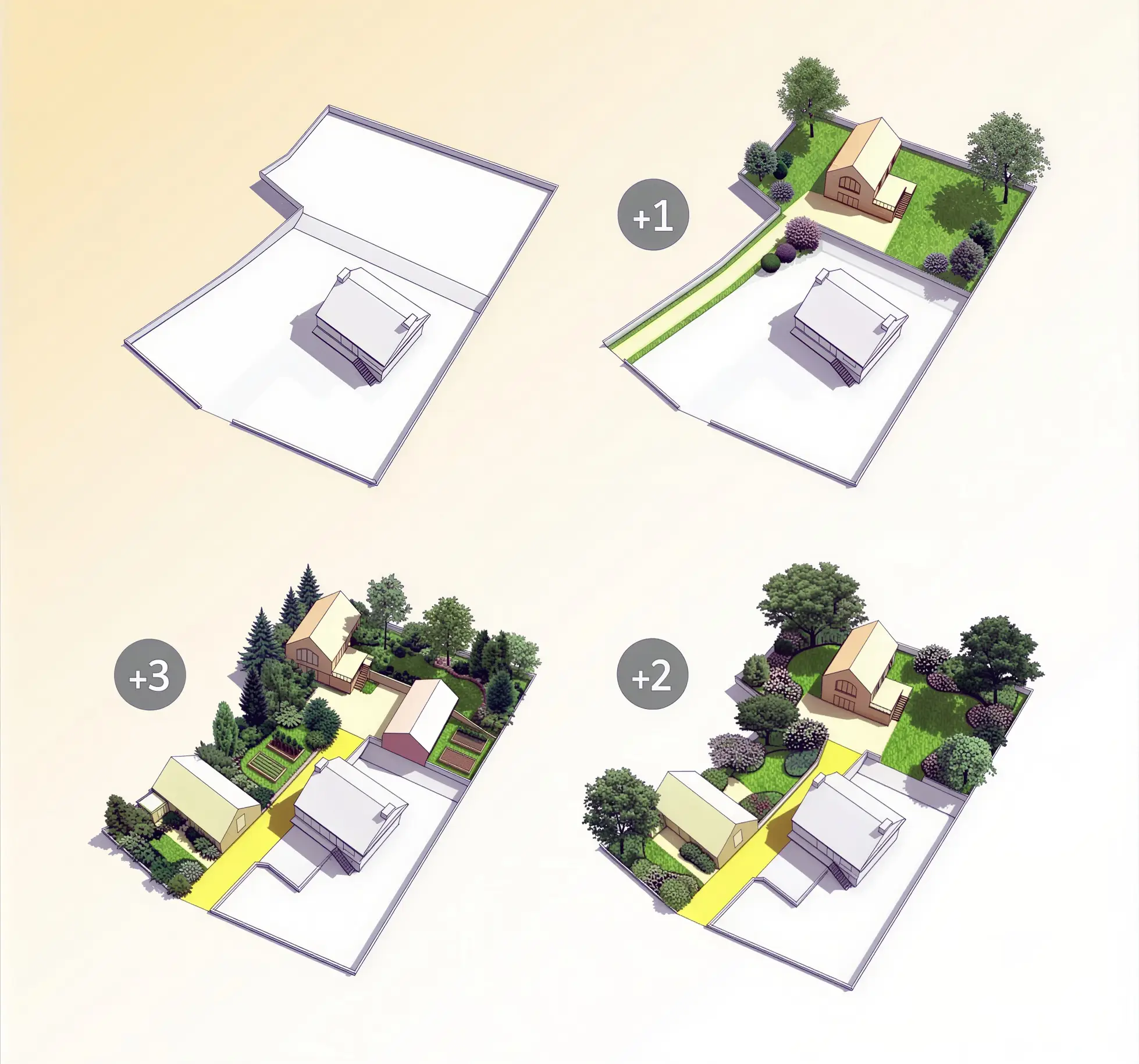
Two scenarios, thousands of options, one shared logic
BIMBY is based on a single principle—building a new, independent structure on an already developed plot—but it unfolds in two main scenarios. In both cases, a somewhat neglected garden is shared, redesigned, and reclaimed to start a new life with new occupants. In both cases, it is the local authority that creates the conditions for this to happen by adapting its urban planning rules and providing a support service. BIMBY cannot exist without this framework.
Scenario 1 — Building in my own garden
The owner remains in control of their plot and builds a new dwelling—a house, a small cottage, a studio, or sometimes an office—for a wide variety of uses:
moving into it yourself for your retirement, handing over the main house to young people who will renovate it, while setting yourself up in a single-level home with a small garden that is easier to maintain,
✼ house a child, parent, or loved one nearby, sharing the garden and barbecues during the warmer months;
✼ create a rental unit to supplement your income.
The existing building is preserved, potentially renovated, and the garden is reorganised and shared. The new residents bring a fresh perspective and new energy to look after the garden!
Scenario 2 — I sell a piece of my garden as a building plot
The current owner detaches a portion of their plot and sells it to a newcomer—a family, a couple, or an individual—who then becomes a builder and gardener on that land.
The new residents will build to live in or rent out, and will cultivate their own garden.
A double benefit: the original owner ends up with a more manageable garden that they can finally maintain with ease. Meanwhile, the area gains a new household in an already well-equipped neighbourhood—as well as a new gardener.
BIMBY and BUNTI: building new and transforming the existing, two often inseparable approaches
BIMBY is distinct from BUNTI, the other major approach developed by Villes Vivantes:
✼ BIMBY = creating a new, independent building on an already developed plot;
✼ BUNTI = transforming the existing building itself: extension, upward extension, interior reconfiguration, renovation, or change of use.
In practice, local authorities very often launch BIMBY-BUNTI operations through a single integrated service that offers the full range of options to property owners in the area. For every resident they meet, the support teams explore all the options — building in the garden, transforming and renovating the existing structure, or both — and it is the owner who chooses based on their needs, their project, their means, and their preferences.
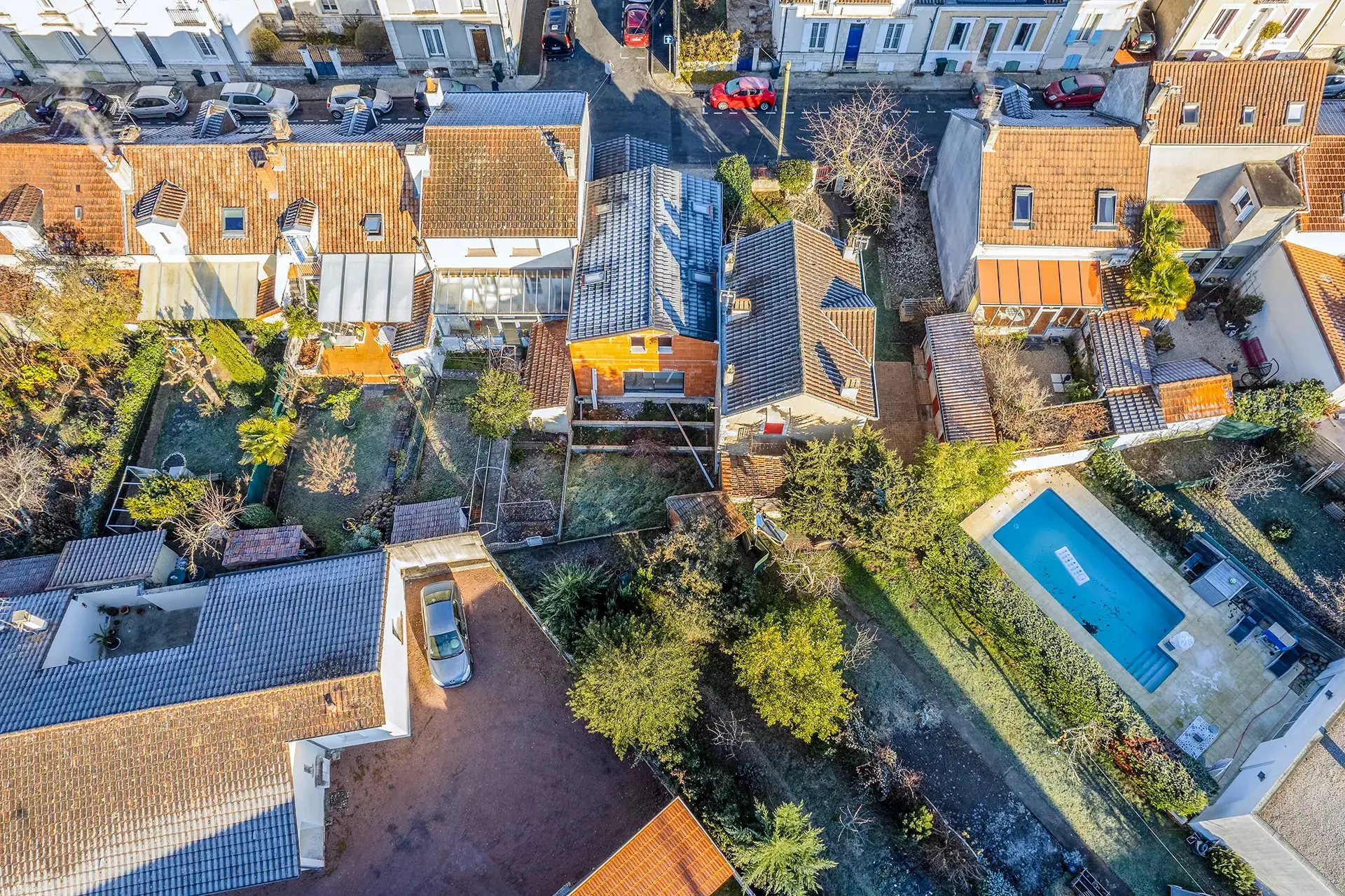

The role of the local authority: defining the framework and organising support
BIMBY does not work without a strong commitment from the local authority. Its role is twofold.
The first step is to define the rules of the game: adapting the local planning regulations (PLU) to authorise and regulate gentle densification projects, and defining qualitative guidelines for each type of urban fabric — including the role of greenery and gardens in new projects.
The second step is to organise support: setting up a service or commissioning an operator — such as Villes Vivantes — to reach out to residents, identify potential projects, and guide each project owner from the initial idea through to construction, which will be carried out by local property and building professionals.
The local authority does not design the projects: it creates the conditions that allow residents to bring them to life. It acts as the conductor of a distributed urban transformation — one that is denser, greener, and more diverse.

The role of residents: builders, gardeners, partners
Homeowners, families, local entrepreneurs: in a BIMBY operation, residents are not mere beneficiaries of an urban project designed for them. They are its authors, acting as both the project owners for construction—which they entrust to a builder, architect, or designer-builder—and as gardeners.
Each BIMBY project is driven by a homeowner who decides on the shape of their building, the layout of their garden, and the species they plant. And every new arrival who settles on a divided plot becomes, in turn, a new resident of the municipality and an active guardian of a small piece of nature in the city.
It is this diversity of perspectives and hands that creates the ecological and typological richness of neighbourhoods transformed by BIMBY.
The result is a city that reflects its residents: dense, green, diverse, and vibrant.
How does a BIMBY operation work?
A BIMBY operation (often launched in conjunction with BUNTI) is structured into several complementary phases:
✼ Area diagnosis and study of gentle densification potential: analysis of the plot pattern and built fabric, identification of relevant areas, and definition of a strategy tailored to different neighbourhoods—integrating issues of greening and biodiversity, adapting housing for ageing, and addressing access to transport, utilities, jobs, services, and facilities.
✼ Regulatory adjustment: revising or adapting the local planning regulations (PLU) to authorise gentle densification projects and define qualitative guidelines, particularly regarding the role of gardens and nature, conditions for integration, parking, and optimising building placement and urban forms from a bioclimatic design perspective, etc.
✼ Defining the operational scope and setting up a resident engagement system: a website and platform for booking in-person or online appointments, "live" design workshops, drop-in sessions, and local communication—to identify project owners and explore the potential of their plots, buildings, and gardens with them.
✼ Project support: individualised follow-up for every project owner, from the initial idea through to completion, including obtaining the building permit. For every resident, all BIMBY and BUNTI options are explored together.
✼ Monitoring and evaluation: measuring results (projects designed, supported, authorised, delivered) and continuously adjusting the strategy.

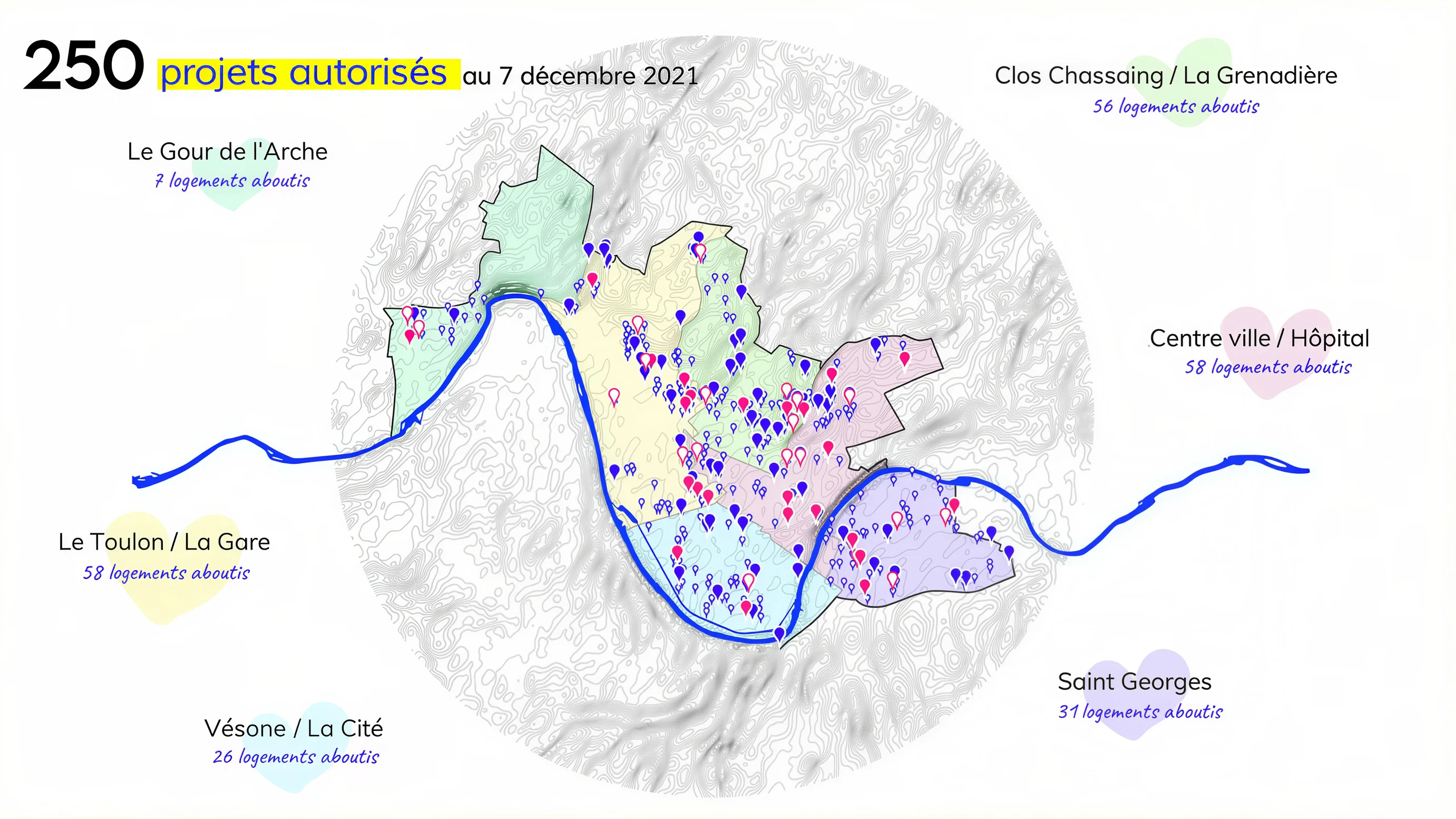
BIMBY produces housing, terraces and balconies, gardens and gardeners
Since 2013, Villes Vivantes has led BIMBY-BUNTI operations in dozens of French municipalities. The results show that a well-managed operation can generate several hundred housing projects within an area—and just as many new gardeners active in the existing urban fabric.
In Périgueux, between 2016 and 2021, 250 housing projects were authorised, half of which were BIMBY and the other half BUNTI. Projects of all sizes—a studio in a garden, a family home on a divided plot, a single-level home on its own land for retirement while keeping one's neighbours—have collectively transformed the city's urban fabric by adding a new and diverse housing supply without altering the overall character of the living environment.
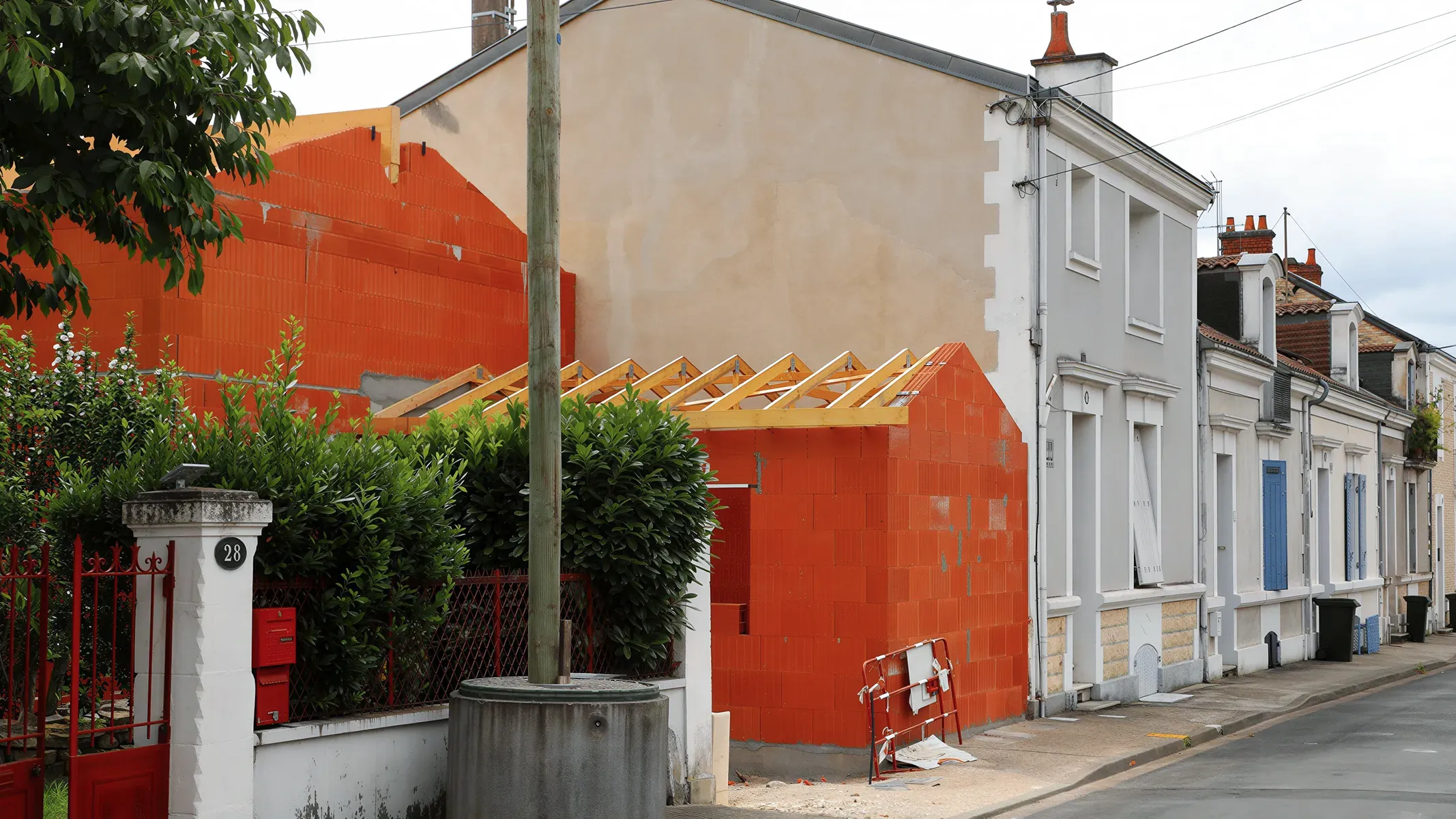
Gentle and organic densification
Because they are driven by a wide variety of project owners and designers, BIMBY projects produce urban forms that are diverse, nuanced, and often more vibrant than those resulting from large-scale planned developments.
Each new building comes with a redesigned garden, planted according to the tastes and habits of its new owner. Once completed, it is often difficult to distinguish BIMBY projects from the existing fabric: they blend in naturally.


No net land take: producing housing without consuming nature
BIMBY adds value to land that is already urbanised, without touching agricultural, natural, or forest land. For a local authority, it is one of the most powerful tools for concretely implementing the no net land take objective without giving up on housing its residents well: producing housing where infrastructure already exists, on plots already served by networks, where residents already come to work, shop, and enjoy facilities.
The positive side of the no net land take policy is the opening up of possibilities for densification, adaptation, and greening of existing built environments.
Affordable housing: diversifying supply without depending on large operators
BIMBY projects are driven by private individuals, with production costs often lower than those of traditional property development projects: for the past 50 years, building one's own house on a plot of land one has purchased has been the primary tool available to the French for building affordable family housing. BIMBY transfers this model of individual owner-led development (where the resident is the project owner) from the form of planned housing developments in urban sprawl to the production of custom-made densification, which will be produced by families but also by people looking to build a single-level home for their later years, to build a rental property on land they already own, etc.
These scattered projects allow new household profiles to enter well-located, well-equipped neighbourhoods, where they will have the opportunity to enjoy a garden. A form of access to nature in the city that should not remain a privilege for much longer...
Greening and biodiversity: more houses, more gardeners, more nature
This is the most counter-intuitive phenomenon—and one of the most powerful arguments for launching a BIMBY operation in an area. The common misconception is that densification means soil sealing and land take. BIMBY proves the opposite.
With the ageing of homeowners and the erosion of purchasing power, the large suburban garden often becomes a burden: too vast to be maintained by hand, it is managed through simplification—mechanical mowing, herbicides, and homogenisation. A poorly maintained large garden thus frequently becomes an ecological desert.
BIMBY reverses this logic. By dividing the plot, we create several human-scale gardens, each entrusted to a different household. This change in scale produces three effects:
✼ Ownership through gardening: with a small area, the relationship with the soil changes. We move from maintenance as a chore to gardening as a choice. It is the ideal scale for actively rediscovering and cultivating living things.
✼ Gardener diversity: smaller plots attract more varied profiles—families, couples, single people—who each bring their own practices and plants. More gardeners mean more sensitive intelligence per square metre.
✼ The mosaic effect: ecology teaches us that habitat diversity is essential. Five 200 m² gardens maintained by five different gardeners offer far more ecological variety than a single 1,000 m² garden left to mechanical mowing.
Recent studies on urban gardens confirm that surface area is not the determining factor for biodiversity: it is the richness and stratification of vegetation—herbaceous, shrubby, and arboreal—that makes the difference. By densifying intelligently, BIMBY creates, gradually and with the residents themselves, the necessary foundation for a genuine ecological transition in suburban areas.
Attractiveness and social connection: a city that reflects its residents
By directly involving residents—as builders, gardeners, and neighbours—BIMBY strengthens their connection to their neighbourhood and helps create a living environment that reflects who they are. It mobilises energy and investment that would be impossible to trigger under a fully centralised model.
BIMBY is therefore much more than just a participatory approach: in a way, it involves welcoming new residents into the gardens of long-time owners... at their own initiative.


BIMBY and the complementary methods of Villes Vivantes
BIMBY is part of a set of four complementary methods developed by Villes Vivantes to implement organic urbanism in local areas:
✼ BIMBY (Build In My Back Yard): constructing a new, independent building on an already developed plot—such as a house, studio, or small office—via plot division or backyard development.
✼ BUNTI: transforming the existing building itself—through extensions, upward extensions, interior reconfiguration, renovation, and adaptation to modern demands.
✼ BAMBA: supporting self-build housing dynamics in structured operations by reinventing dense custom-build plots and custom-built detached homes.
✼ BRAMBLE: strategic intensification operations based on a multitude of small, high-density projects, which may include replacing an existing building.
These four approaches have been tested and validated in numerous French municipalities. They can be used individually or combined depending on the specific needs of the area. In practice, BIMBY and BUNTI are very often deployed together as part of the same support service.
Learn more
Launch a BIMBY BUNTI project in my area
✼ Book an appointment with Thomas Hanss, a national expert in BIMBY and BUNTI projects, to discuss the opportunity of launching a project in your area.
✼ With the VVPLACE teams: conducting a pre-operational study to assess potential and define the goals and scope of a project.
✼ With the VVPLUS teams: managing and leading a project to create 50, 100, 200, or 300 additional housing units without urban sprawl over 5 years.
Examples of ongoing projects
✼ The Lorient Agglomération BIMBY BUNTI project. ↗
✼ The BIMBY BUNTI project of Morlaix Communauté. ↗
✼ The BIMBY BUNTI project of the Pays de Tarusate. ↗
✼ The BIMBY BUNTI project of the Pays de Ribeauvillé and the Kayserberg Valley Community of Communes. ↗
✼ The BIMBY BUNTI project of the SCoT (a French sub-regional strategic plan) of the Central Vosges. ↗
Case studies
✼ Ministry of Ecological Transition (2019). Densifier les zones résidentielles en s’appuyant sur le BIMBY [Densifying residential areas using BIMBY]. Tool sheet, Recomposer la ville sur la ville et encourager le recyclage urbain [Rebuilding the city on the city and encouraging urban recycling]. ↗
✼ Grisot, S. (2022). Périgueux construit dans ses jardins [Périgueux builds in its gardens]. Dixit.net, 26 April 2022. ↗
✼ France 3 — 8 PM News: Comment mener à bien une opération BIMBY? L’exemple de Périgueux [How to successfully carry out a BIMBY project? The example of Périgueux], 2024. ↗
✼ France 2 — News: BIMBY, construire dans mon jardin: comment faire d’un jardin deux jardins pour loger les Français [BIMBY, building in my garden: how to turn one garden into two to house the French], 25 March 2024. ↗
✼ TF1 — 1 PM News: Quand la densification douce à Périgueux fait le JT: la maison avec jardin a-t-elle encore un avenir à l’heure du ZAN? [When gentle densification in Périgueux makes the news: does the house with a garden still have a future in the era of no net land take?], 19 April 2022. ↗
✼ France Inter — L’urbanisme demain [Urban planning tomorrow]: Des maisons sur mesure pour bâtir la ville avec les habitants [Custom-made homes to build the city with its residents], 29 January 2022. ↗
References
✼ Caraire, D., Hernandez, A. (2024). BIMBY et BUNTI: faire des habitants les maîtres d’ouvrage de la transformation des tissus urbains et ruraux [BIMBY and BUNTI: making residents the project owners of urban and rural transformation]. Organic Cities, Paris. Sciences Po & Villes Vivantes. ↗
✼ Miet, D., et al. (2025, February). BIMBY, BUNTI: outils pour réussir la transformation des quartiers pavillonnaires en villages [BIMBY, BUNTI: tools for successfully transforming suburban neighbourhoods into villages]. Opérations Immobilières, No. 171-172, January-February 2025. ↗
✼ Miet, D. (2024). La densification douce, ou la miniaturisation de l’industrie immobilière à l’heure du ZAN [Gentle densification, or the miniaturisation of the property industry in the era of no net land take]. La Grande conversation, Terra Nova, 6 March 2024. ↗
✼ Munson, L. (2024). L’auto-promotion au service d’une densification douce [Owner-led development in the service of gentle densification]. La Grande conversation, Terra Nova, 29 February 2024. ↗
✼ Pouvreau, L. (2023). L’autopromotion accompagnée: un modèle économique pour la production massive de logements abordables en France [Supported owner-led development: an economic model for the mass production of affordable housing in France]. Le guide des villes vivantes, November 2023. ↗
FAQ
What is BIMBY in urban planning?
BIMBY (Build In My Back Yard) is an urban planning approach that densifies existing suburban areas through resident-led initiatives: building a new home in a garden or dividing a plot to welcome a new resident—and a new gardener. It was developed by Villes Vivantes starting in 2013.
What exactly is BIMBY—the robot or the urban planning method?
Both exist! The Bimby food processor is a Vorwerk brand, very well-known in Italy and Portugal. The BIMBY (Build In My Back Yard) approach is a French urban planning method with no connection to the appliance. This page is exclusively about the urban planning approach.
BIMBY, what happens to the gardens?
BIMBY shares gardens to help them thrive. A large garden that is difficult for an ageing owner to maintain is reorganised into two or three manageable gardens, actively cultivated by committed families. More gardeners mean more hands for planting, more plant diversity, and more biodiversity. Recent studies confirm that the ecological richness of a garden depends more on the quality of its maintenance than on its size.
What is the difference between BIMBY and BUNTI?
BIMBY involves building a new, independent structure on an already developed plot. BUNTI involves transforming the existing building itself: extensions, upward extensions, reconfiguration, or renovation. In practice, both approaches are very often offered to residents together; it is the owner who chooses, after exploring all options with their adviser.
Is BIMBY compatible with the no net land take goal?
Yes, BIMBY is one of the tools most directly compatible with the no net land take goal. It allows for housing production by mobilising land that is already urbanised—shared gardens, divisible plots—without consuming agricultural or natural land.
How can I launch a BIMBY operation in my municipality?
Implementation relies on three levers: adapting urban planning regulations (PLU) to authorise gentle densification projects, defining a strategy tailored to different urban fabrics, and setting up a support system for residents with projects. Villes Vivantes assists local authorities at every stage, from the diagnostic phase to monitoring completed projects.
What results can be expected from a BIMBY operation?
Results vary depending on the area and the intensity of the operation. In projects led by Villes Vivantes, several hundred housing projects are typically identified over a 3 to 5-year period, a significant portion of which result in a building permit. In Périgueux, 250 homes were authorised in 5 years—the equivalent of a very large housing development or a major apartment complex, produced without public land, without a developer, and in the heart of the existing city, while preserving and renewing its gardens.