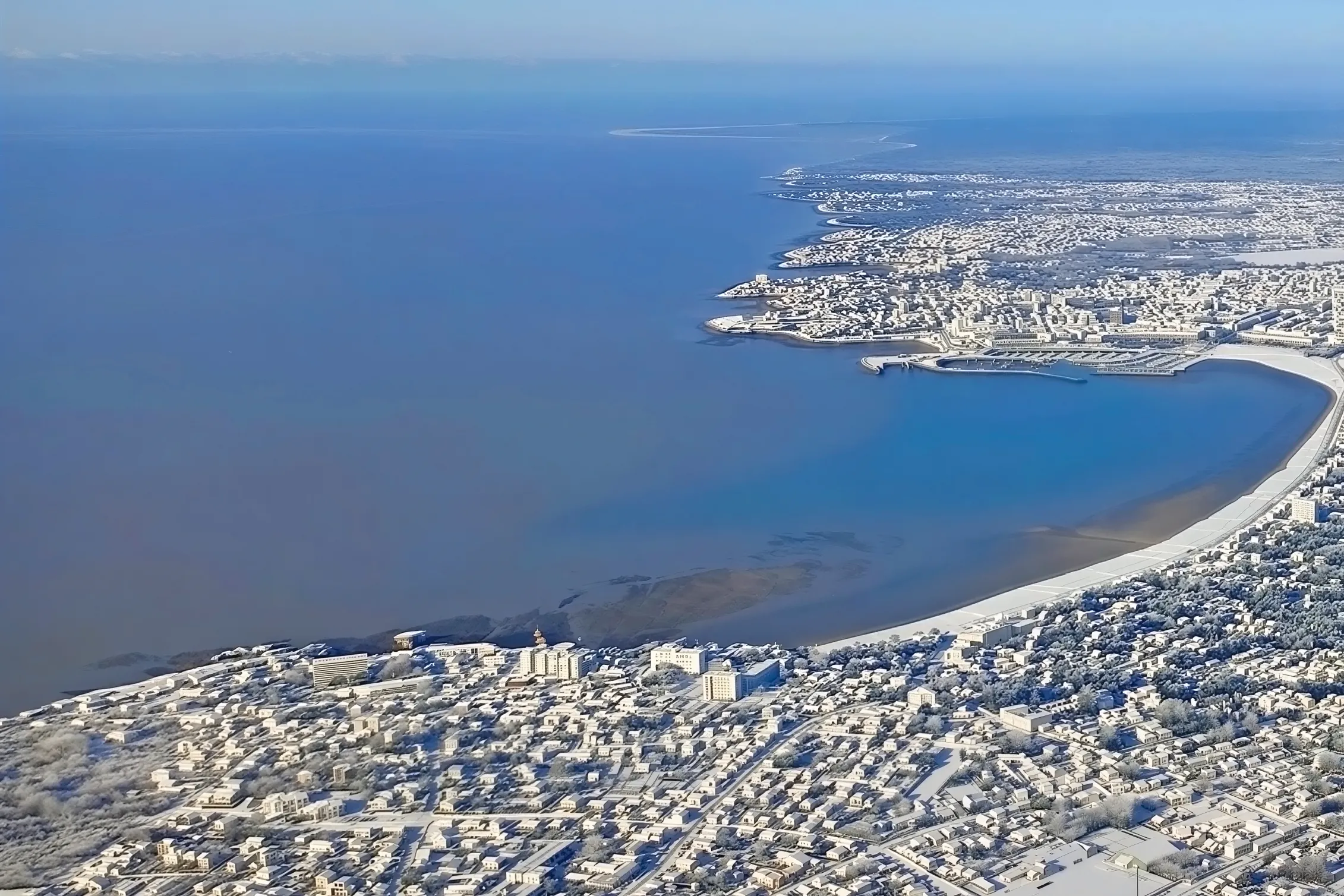
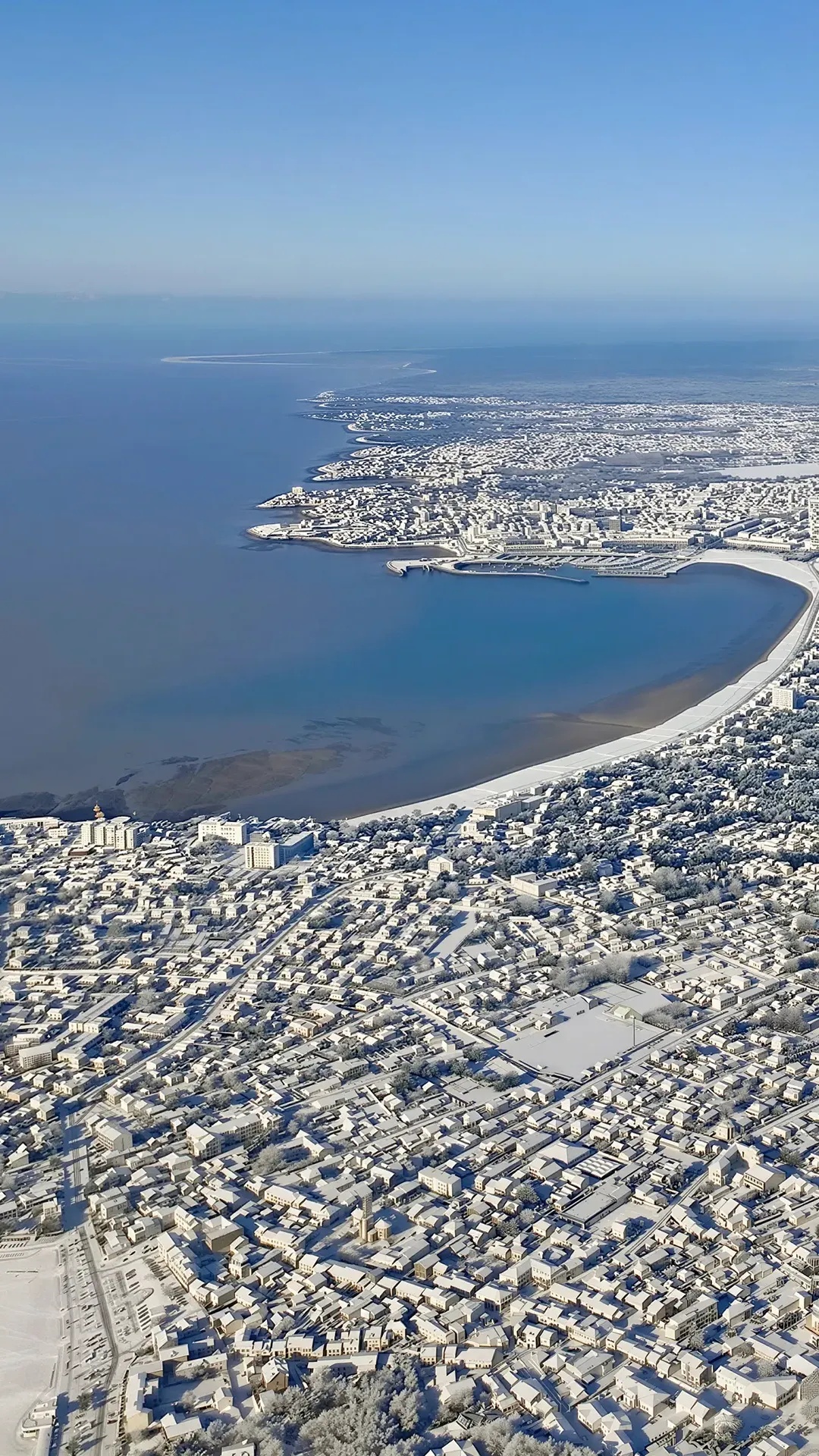
On 18 and 19 September 2025 in Rennes, the Organic Cities II — French West Coast symposium, organised by Villes Vivantes, Sciences Po Rennes and the OFCE, brought together 70 talks, 10 round tables and 600 registered participants around a single question: is the Atlantic seaboard a geographical and political option for the France to come?
All the contributions are published here → Organic Cities II: proceedings and replays
Here are a few extracts.
The France to come: an introduction to the organic reshaping under way
✼ La French West Coast? [The French West Coast?] — David Miet, urban planner, president of Villes Vivantes ↗
✼ Polyphonie: les vides et les pleins de l'espace français [Polyphony: the voids and solids of French space] — Jacques Lévy, geographer, winner of the Vautrin-Lud Prize ↗
✼ Densification d'une part, désertification de l'autre: la nature peut-elle tirer parti du retrait de l'homme? [Densification on one side, depopulation on the other: can nature take advantage of human withdrawal?] — Thomas Hanss, urban planner and landscape architect, co-founder of Villes Vivantes ↗
Between the frenzy for the coast and the retreat of the shoreline: what options are there for welcoming newcomers and democratising access to the West Coast?
✼ La Côte Ouest française face à son potentiel démographique: et si on élevait les capacités d'accueil à la hauteur des besoins? [The French West Coast and its demographic potential: what if we raised capacity to match needs?] — Lucas Pouvreau, geographer and urban planner, head of studies at Villes Vivantes ↗
✼ Projection du trait de côte et analyse des impacts à horizon 2100 [Shoreline projections and impact analysis to 2100] — Julia Jordan, deputy director for risks, water and the sea at Cerema (a French public agency for climate adaptation and regional planning expertise) ↗
✼ Densifier pour accueillir plus, une opportunité pour le climat? [Densifying to house more people: an opportunity for the climate?] — Xavier Timbeau, director of the OFCE, Sciences Po Paris ↗
Towards a resilient, robust or antifragile coast?
✼ La ville dans laquelle vous vivez ne devrait pas exister [The city you live in should not exist] — Nolan Gray, urban planner, legislative and research director at California YIMBY ↗
✼ Modélisation et politique de réduction des risques littoraux à Tokyo et New-York [Modelling and coastal risk reduction policy in Tokyo and New York] — Yuki Miura, engineer and researcher, New York University ↗
✼ Qu'est-ce qu'un territoire anti-fragile? [What is an antifragile area?] — Julien Meyrignac, urban planner, co-founder of Public(s) ↗
From Greater Paris to the Greater West Coast?
✼ “Partager Paris”: pourquoi l'échelle métropolitaine est-elle la seule véritable option? [“Sharing Paris”: why is the metropolitan scale the only real option?] — Marion Waller, urban planner and philosopher, director of the Pavillon de l'Arsenal ↗
✼ 20 ans de Grand Paris: pourquoi un réseau de transport ne suffit-il pas? [20 years of Greater Paris: why is a transport network not enough?] — Daniel Béhar, geographer ↗
✼ Paris, Côte Ouest: quelle démocratie pour des espaces en mouvement? [Paris, West Coast: what kind of democracy for spaces in motion?] — Jacques Lévy, geographer, winner of the Vautrin-Lud Prize ↗
✼ Trois scénarios pour faire grandir la côte ouest [Three scenarios for growing the West Coast] — David Miet, urban planner, president of Villes Vivantes ↗
How do we stop architecture from ruining everything?
✼ Le biais du survivant: la beauté que nous voyons est celle que nous avons choisi de sauver [Survivorship bias: the beauty we see is the beauty we chose to save] — Samuel Hughes, journalist and researcher, Oxford University ↗
✼ La Grande Motte, de nouveau à la mode 60 ans plus tard? [La Grande Motte: back in fashion 60 years on?] — Pierre-Louis Leclercq, architect, Agence Leclercq Associés ↗
✼ Le style néo-régional basque, efficacité et controverses [The neo-regional Basque style: effectiveness and controversies] — Jacques Battesti, head of collections at the Musée Basque et de l'histoire de Bayonne ↗
✼ La densification douce et ses micro-folies [Gentle densification and its micro-follies] — Amandine Hernandez, urban planner and architect, co-founder of Villes Vivantes ↗
Democratising tourism, overtourism and the local economy
✼ À partir de quand peut-on considérer qu'il y a surtourisme? [At what point can we speak of overtourism?] — Linda Lainé, journalist specialising in tourism, editor-in-chief of L'Écho touristique ↗
✼ La concentration des lits touristiques est-elle la meilleure solution pour démocratiser le tourisme et, en même temps, limiter son impact environnemental? [Is concentrating tourist beds the best way to democratise tourism while limiting its environmental impact?] — Jean Pinard, geographer, former director general of the Comité Régional du Tourisme et des Loisirs d'Occitanie ↗
✼ Peut-on encore viser l'attractivité touristique? [Can we still aim to attract tourists?] — Jessica Viscart, deputy director of Tourisme Bretagne ↗
Equipping the coast and its hinterland: infrastructure
✼ Relier la côte ouest [Connecting the West Coast] — Timothy Jackson, co-founder of Velvet ↗
✼ Améliorer la mobilité du quotidien sur la côte ouest: rapprocher l'offre de la demande [Improving everyday mobility on the West Coast: bringing supply closer to demand] — Thierry Mallet, CEO of Transdev ↗
✼ Littoralisation et mobilités [Coastal concentration and mobility] — Aurélie Jehanno, consulting director at SYSTRA, associate lecturer at Sciences Po Rennes ↗
✼ Bordeaux Métropole est-elle assez grande pour se payer un métro? [Is Bordeaux Métropole big enough to afford a metro?] — Mickaël Baubonne, founder of the “métro de Bordeaux” project, lecturer and researcher at the Université de Haute-Alsace ↗
Equipping the coast and its hinterland: housing
✼ Peut-on produire du logement social sur le (rétro) littoral? [Can social housing be built on the coast and its hinterland?] — Muriel Boulmier, regional councillor, president of the Union régionale HLM de Nouvelle-Aquitaine (the regional federation of social housing bodies) ↗
✼ Reconfigurer et rénover l'existant: un réel levier pour accueillir? [Reconfiguring and renovating existing buildings: a real lever for housing more people?] — Gilles Barnet, head of the Housing department at Morlaix Communauté ↗
✼ La densification douce de la côte ouest: peut-on produire 50% de logements abordables en coopérant avec les habitants? [Gentle densification of the West Coast: can 50% affordable housing be produced by cooperating with residents?] — Thomas Hanss, urban planner and landscape architect, co-founder of Villes Vivantes ↗
The coast as an asset for attracting and retaining talent?
✼ Industrie européenne: recréer des avantages ou disparaître? [European industry: recreate advantages or disappear?] — Antoine Foucher, president of Quintet Conseil ↗
✼ Rennes est-elle une métropole suffisamment grande pour recruter et développer un projet technologique ambitieux? [Is Rennes a big enough metropolis to recruit for and develop an ambitious technology project?] — Mathilde Martin, geographer, general secretary of Sweetch Energy ↗
✼ Attirer les talents pour la compétitivité et la performance française [Attracting talent for French competitiveness and performance] — Pierre Leroy, president of the French Proptech ↗
After the factory, the beach: the social contract of tomorrow's industry?
✼ Saint-Nazaire: ville active, ville plaisir [Saint-Nazaire: a working city, a city of leisure] — Christophe Cotta, deputy mayor of Saint-Nazaire ↗
✼ Pourquoi le littoral est un atout majeur pour recruter et fidéliser les profils techniques? [Why is the coast a major asset for recruiting and retaining technical staff?] — Hervé Kermarrec, president of Groupe Kermarrec, president of MEDEF Bretagne (the regional branch of the French employers' federation) ↗
✼ Réindustrialiser, électrifier, décarboner, numériser: l'infrastructure portuaire au cœur des transitions énergétique et numérique [Reindustrialising, electrifying, decarbonising, digitising: port infrastructure at the heart of the energy and digital transitions] — Cécile Maisonneuve, president and founder of DECYSIVE ↗
Perspectives from elsewhere
✼ Le programme New Towns: 12 villes nouvelles et 1,5 million de logements neufs pour enrayer la pénurie de logements et libérer le potentiel économique régional de l'Angleterre? [The New Towns programme: 12 new towns and 1.5 million new homes to halt the housing shortage and unlock England's regional economic potential?] — Patrick Lamson, PhD in urban planning, Marron Institute NYU ↗
✼ California Forever: entre San Francisco et Sacramento, une ville nouvelle comme réponse au désastre du logement en Californie? [California Forever: between San Francisco and Sacramento, a new town as a response to California's housing disaster?] — Gabriel Metcalf, urban planner, California Forever ↗
✼ Aménager un littoral à haute intensité: Da Nang — littoral, métropole, village [Planning a high-intensity coast: Da Nang — coast, metropolis, village] — Michael Waibel, geographer, University of Hamburg ↗
✼ De Tanger à Casablanca: l'aménagement du littoral au service de l'ambition industrielle du Royaume? [From Tangier to Casablanca: coastal planning serving the Kingdom's industrial ambitions?] — Ahmed Khalid Benomar, economist, special adviser to the Ministère de l'Économie et des Finances du Maroc ↗